Posted by: carlsumner | August 10, 2011

Whose Fault is it Anyway?

This has been manifesting for years; generations.  Every society in history has seen the class with the perceived least make some attempt to aggressively assert what power they have over those that they judge to be oppressing them.  Not all of those with the least will seek to assert themselves in this way. To the majority of those within the society, myself included, the actions are abhorrent and without obvious justification.  But that alone does not prevent the actions.  It does not remove the perceived injustices or wipe away the cloud of disaffection and disengagement from their communities, whether we believe them to be real or no.

Expensively educated politicians pontificating that young people should be grateful for what they have, will not work.  Newspaper editors deriding people who have shown a blatant disregard for basic human qualities, as scum and rats, will not work.  Mocking an inability to communicate as we see fit, ignoring divided families, drug and alcohol addictions, gang intimidation, simple greed and chaotic circumstances, will not work.

The trigger was the police shooting of an (alleged) armed suspect, Mark Duggan.  This has become almost irrelevant as hundreds of people across a range of cities throughout the country have taken advantage of weaknesses in the law, fears and suspicion within communities and the security of a mob and its mentality, to make their own personal short-term gains without thought for the future ramifications.

Is this inability to look beyond the immediacy of our own lives a national disease? Or even a global one?  Is this selfishness ingrained to the point where a £10 donation to http://bit.ly/qtI39T allays our misgivings over starving humans in Africa?  Debate continues to rage, and inaction continues to fester, over the ravaging of the planet and it’s natural resources, that could leave future generations at the greater mercy of disaster and conflict.  Yet, still nothing is done.

Ultimately, as a society, we have only ourselves to blame.  We knew there was an underclass of people, for whom the decencies by which we live meant little or nothing. Instead of enabling educators to engage more and provide hope and aspiration,  it is made more difficult.  We test, rush, isolate and blame.  Instead of creating role-models to aspire to through the media and within our own communities, we promote narcissism, greed and the separation of effort, dedication and discipline from success.

There is no excuse for the behaviour witnessed.  There is hope in the decency shown to individuals and communities as a whole and the way in which, even in the face of utter wickedness, some people still find the ability to show inspirational humanity http://bbc.in/rhDy4s

As a society, and for the sake of our future generations, we must find the solutions.

Strong leadership in all walks of life requires many characteristics, not least the ability to plan and prepare for the future.  Too often, short-term popular gains are tolerated or encouraged and this concept has manifested itself throughout society with the instant 15 minute-fame of celebrity culture and access to media that allows one and all to publicly express themselves, to potentially millions of people.  It is possible to achieve this with little or no effort or application and we see examples of this everyday to varying degrees of success.

On a global scale we have been subjected to the ramifications of the economic fall-out of borrowing more than we could afford.  Governments make decisions based upon their terms of office and  their electoral viability.  Again, a short-term gain masks an inability or unwillingness to make decisions that may not yield their outcomes for many years.  Even the measures of austerity that have been introduced in recent months, which are obviously unpopular in the extreme, have only come about in the face of a catastrophic ‘other reality’ that we would have faced with little or no action. These measures aren’t the preparations of well-laid plans.  This isn’t through careful thought and reasoning as to the effects on people and communities in 30 years time. This is attempting to shut the door even as the hooves are throwing mud in our faces.

The point?

In April 2010, prior to the General Election, Nick Clegg predicted riots if the Conservatives were elected, as they would have no overwhelming majority and would be faced with difficult and unpopular decisions to make http://bit.ly/ncQ9xH

How prescient; but what contingencies were subsequently put in place?

To put a blunter edge on it, a member of the current government, partly through political point-scoring, saw trouble ahead and yet nothing appeared to be done.  Cuts were made, jobs were lost, homes were repossessed.  Yet, expenses were fiddled, bonuses were paid, wars were fought and the media was allowed to run amok.  An already divided society (by race, class and opportunity) was given no means of reparation; no ability to heal rifts other than political phrasing (Big Society!) and the assertion that if you wanted to fix it you had to do it yourself.

These people cannot be cut adrift.  For David Cameron to deem elements of our country ‘sick’ reflects on him as a leader and on those who had the ability to influence and do something good over the last 50 years.  If people’s values are warped or at odds with the beliefs of the majority then society must take responsibility for the consequences.  Brushes and brooms are too little and, for some, too late.
Posted by: carlsumner | March 3, 2011

Education in Jordan

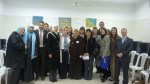
During the half-term February 19th – February 25th, I took part in a TIPD visit organised through the British Council to Jordan.  The main focus of the trip was to investigate primary science in the Jordanian education system and methods to develop creativity in teaching and learning practices.

In addition, myself and 4 other colleagues from the Lancashire region travelled as part of the Connecting Classrooms project http://www.britishcouncil.org/learning-connecting-classrooms.htm whereby we are looking to develop strong links between schools in the UK and Jordan using technology as a focus to enhance communication and interactivity between children in different communities.

Jordan is seen as a leader in the region for developing high standards in maths and science and has a dedication from the very highest level to providing a significant portion of the country’s budget towards the education system as a whole.  There has also been an impetus over the last few years from the Ministry of Education towards enhancing the ICT skills of teachers and embedding greater opportunities for children to utilise technological advances.  The aim is to be an ICT hub for the region.

Teacher training is seen as integral for the sustained improvement of educational standards in Jordan and significant funding has been provided to enable this development.   Government run agencies such as the Queen Rania Teacher Academy (the Queen being a vociferous ambassador for equal rights and education in Jordan) and private organisations such as CADER (ChangeAgent for Arab Development and Education Reform) are leading the way in spreading methodology that has been seen in other countries, notably Western Europe and North America.

To the age of 18, the Jordanian education system is divided between 4 types of school.  Military schools provide education for children of serving personnel, private schools with fees ranging from 1500JD to 25000JD per year, public schools and UNRWA (United Nations Relief and Works Agency) for Palestine refugees in the Near East.

Competition for places at University within Jordan and abroad is incredibly high, with intense pressure on students to attain near-perfect standards to be accepted (98% and above is considered a realistic target).  Incidents of suicide have been reported of students failing to reach the highest levels.

At ground level, the foundations for a solid education system were witnessed, as learning is considered to be significant and a right to be cherished by all Jordanians. Teachers have value in society, even though their pay dramatically fails to reflect this, and each institution we visited harboured a welcoming and open attitude that captured our attention throughout the visit.

Posted by: carlsumner | September 10, 2010

Fun to learn?

Making learning fun – the postulated theme for #ukedchat on Twitter 9/09/10 provoked an interesting debate on the variety of methods/resources that could aid to achieve this , but perhaps more significantly, on the seeming necessity in society today for educators to ‘perform’ and create a fun environment for learners to learn.

It is very easy to get caught up in the semantics of education – what to one person is ‘fun’ is another’s idea of noise, or rowdiness and a lack of control.  The very word ‘fun’ provoked debate on what is expected in a school and what the role of an educator should entail.

General acknowledgement appeared to focus upon the need to create learning opportunities that are challenging and engaging and that allow the learner to develop their own sense of fun from the activities undertaken.  To catch them unaware at their learning was popular – although at some point we must surely recognise when we are, so that we understand the value in discovering something new or becoming better at a skill and making progress?

Life isn’t a constant, fun-filled arena for most people, so is it unfair to present children with education that only focuses upon learning when we are happy or attempting something we like? Are there situations or topics and skills to learn, whereby ‘fun’ isn’t appropriate as a tool for learning?  And yet it was generally agreed that in situations where people have fun and enjoy they are very positive towards learning and are likely to engage more.

Finding the balance is key, identifying individual needs and understanding the environments and situations that children learn best in is an essential requirement for all educators.  ‘Fun’ isn’t always required, but is certainly a required tool.

Posted by: carlsumner | September 2, 2010

Great Expectations

First day with the children today and the emphasis was almost entirely upon our expectations. What do the children expect from their time in Year 6 and ultimately what are their aspirations for the future, although we’ll address that more, further down the line?

What are my expectations of them as children at the top-end of our school? What am I looking for from them, in terms of their attitudes and behaviours and their learning?

I always find their responses fascinating – you can gain valuable insights into how they see themselves when they express their hopes and fears.  I see an essential part of our roles as educators, to create an environment whereby children see the value of learning and embrace its possibilities based upon their own desires and interests.

This neatly linked with the #ukedchat discussion via Twitter this evening which posed the question – What are the primary / essential skills of the ideal 21st century educator and how can we achieve that?

I loved the fact that even this pointed to higher aspirations – attempting to achieve an ideal.

The fundamental point that was repeatedly maintained was that the role was to facilitate opportunities for learners to embrace and utilise the relevant resources, technologies and values of the day to prepare them for the choices that they may make in the future.

A noble aim and one that began in earnest again today.

Posted by: carlsumner | September 1, 2010

Diving In!

Most people in education would admit that they could find work to do 24/7 and by definition can never feel fully prepared.  By my own admittance, I feel like I fly by the seat of my pants most of the time.   I enjoy the feeling of being prepared but need the pressure of limited time or impending deadlines to really get the ideas flowing.  Or maybe i’m just lazy!

Either way it’s time for a new year to start and I genuinely feel a huge sense of excitement.  There are so many new projects and ideas to work on (not least our implementation of a more flexible and creative  delivery of the curriculum that everyone is excited about), new staff to welcome, support and learn from and a new class of children to be enthralled and amazed by!!

A new scheme of work for ICT was introduced to staff today that breathes fresh air into our use of technology and media across the curriculum.   For most it looked slightly intimidating but I was encouraged by everyone’s willingness to learn any new skills required in order to enable the children to progress.

I also feel a new sense of motivation after the refreshing break.  I Will keep this blog updated.  I Will find the time for regular bike rides.  I Will get up to take Buster for a walk before work.

Prepared or not, its a good time to take a deep breath and dive right back in.

Posted by: carlsumner | August 8, 2010

Settling In

Originally uploaded by cjs1976

It didn’t take long for Buster to feel right at home.

Posted by: carlsumner | July 16, 2010

A Creative Spark!

A creative curriculum. Striving to encourage children to be more creative learners, independent thinkers, taking ownership of their own education. As educators (i’m debating whether I prefer this term to teacher) finding and developing innovative ways to engage children and help them to understand new and difficult concepts. This is our aim and one which at Flakefleet we have undertaken with renewed relish in the last few months as we seek to move the school forward after the dramatic progress made in the last 18 months.

It can be daunting and more than a touch confusing, trying to weave your way around the curriculum, checking progression, monitoring skill delivery – is everyone where they should be? It’s benefits will be seen when the web is embedded and allowed to flourish as the school gets to grips with the openness and complexity of a new and dynamic period of learning.

I experienced the first real sparks just the other day when discussing the potential of a new theme with a colleague and in that moment fresh ideas and a new direction for the learning opened up. The Lightbulb Moment’ when it just clicks. I actually laughed because it felt so good to feel that and that will fire me on as it is the feeling you want the children to experience and cherish.

Posted by: carlsumner | June 16, 2010

Cuba!

Cuba!.

Beginning to get to grips with all the variety of Web 2.0 materials out there – there’s just so many and so much to remember and so little time!!
I have a personal goal to have tried a variety of tools with the children before summer – we are blogging, and using Prezi as if our very lives depend upon it!

Posted by: carlsumner | April 30, 2010

Killing creativity

Noted speaker Ken Robinson, hilariously, yet with more that a sense of seriousness, explains how schools kill creativity.

Posted by: carlsumner | April 28, 2010

How sad

The saddest element of the whole bigotgate drama today seems to be the reaction that people have had to either the use of the word by the poltician and/or the views held by the ‘dear old lady’.  Politicians are scared stiff of honesty because someone, somewhere will take offence or object to what has been said – and this may cost votes (either popular or real).  why did he not challenge her views when he had the opportunity? – because it was loose and couldn’t be managed/manipulated? GB would have earned respect by engaging with the lady even if it meant disagreeing with her.

Following on from the fall-out was the reaction from ‘ordinary’ folk to the drama.  General consensus was that she was correct – where did these Eastern Europeans come from? Who did they think they were taking all our jobs?  Television cameras in the area frequently panned across the streets and play areas where many young people stood around in the middle of the day.  Presumably it was their day off.

« Newer Posts - Older Posts »

Categories